Dive into visual storytelling
Testing the resilience of Florida’s benthic habitats against multiple stressors
In the Experimental Reef Lab, scientists with NOAA's Atlantic Oceanographic and Meteorological Laboratory (AOML) and the Cooperative Institute for Marine and Atmospheric Studies (CIMAS) are taking coral resilience experiments to the next level by exposing them to multiple stressors at once including thermal stress, ocean acidification, and hypoxia (low oxygen).
Unlocking the secrets of resilient corals virtual reality experience
For the past three years, scientists at NOAA’s Atlantic Oceanographic and Meteorological Laboratory (AOML) and the Cooperative Institute for Marine and Atmospheric Science have been uncovering the secrets behind the extraordinary resilience of corals in PortMiami. Now, you can dive into their groundbreaking research like never before with a new 360° virtual reality experience, Unlocking the Secrets of Resilient Corals.
All about the Cooperative Institute for Marine and Atmospheric Studies
Welcome to the Cooperative Institute for Marine and Atmospheric Studies, a NOAA Cooperative Institute at the forefront of marine and atmospheric research.
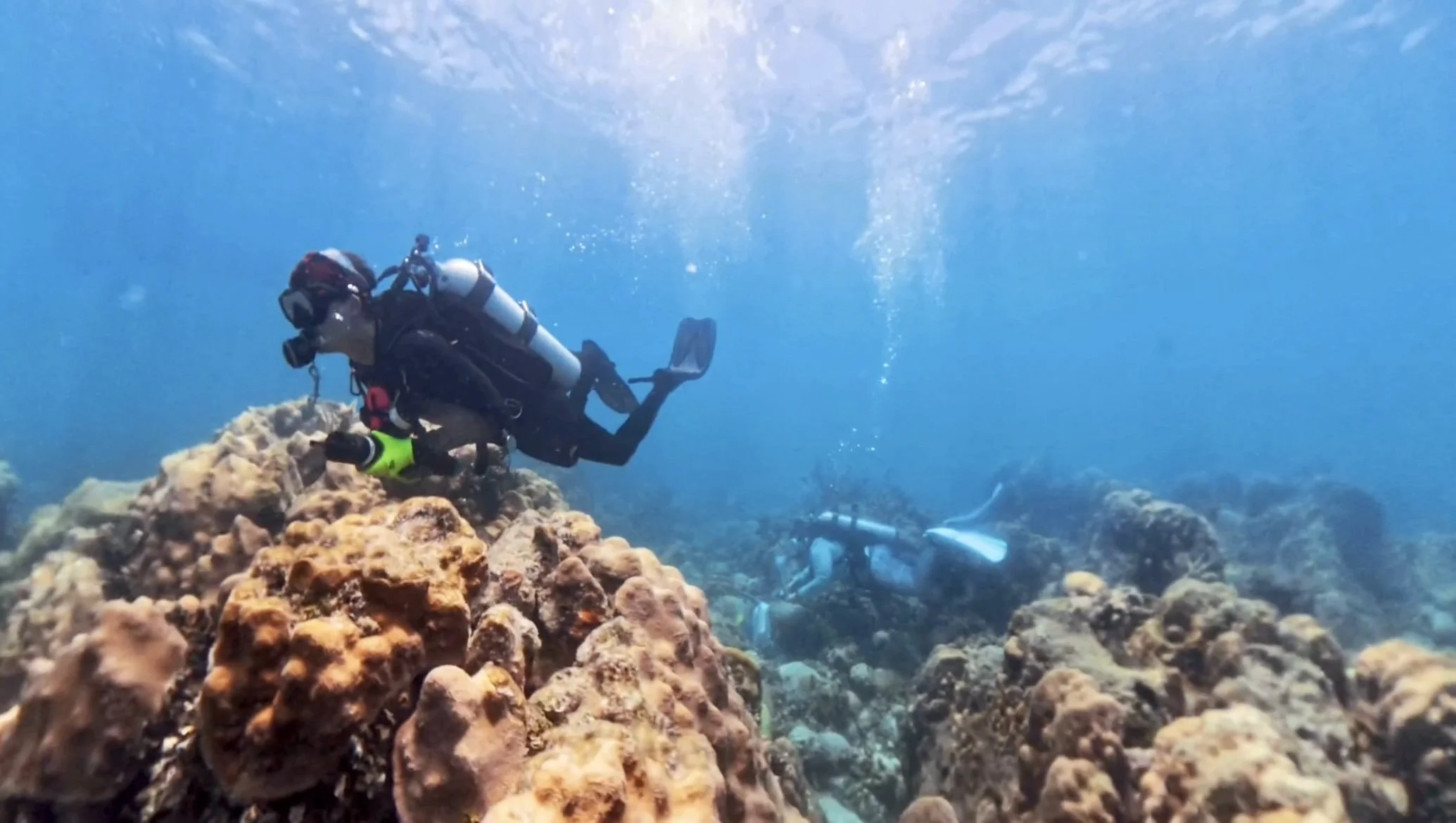
Follow coral reef scientists at NOAA’s Atlantic Oceanographic and Meteorological Laboratory as they maintain underwater instruments
For eleven consecutive weeks, the Coral Program at NOAA’s Atlantic Oceanographic and Meteorological Laboratory (AOML) laid anchor at this long-term monitoring site to deploy and maintain Benthic Ecosystem and Acidification Monitoring Systems (BEAMS) that simultaneously measure net community production and calcification. These metrics of reef metabolism are critical to assess whether Cheeca Rocks is undergoing growth or erosion.
Inside reef restoration: Alkalinity enrichment with Kenzie Cooke
Join a University of Miami Ph.D. student, Kenzie Cooke, for an overview of her research with the Coral Program at NOAA's Atlantic Oceanographic and Meteorological Laboratory exploring alkalinity enrichment and its potential benefits bolstering coral restoration.
From sample to source: tracking pollution pathways in AOML’s Molecular and Environmental Microbiology Lab
With sterile sample bottles at the ready, scientists in the Molecular and Environmental Microbiology Lab at AOML prepare to capture water samples for analysis in the lab. Invisible to the naked eye, nutrients, pollutants, and entire communities of bacteria, algae, and other microorganisms drift through these waters leaving clues in the form of pollution and DNA signatures. The goal of AOML’s microbiologists is not only to figure out what types of pollutants and microorganisms are in this water, but to determine their origin – a process known as microbial source tracking.